
Little Egret Habitat, Diet, Habits, and Where It Is Spreading
- Aug 3
- 5 min read
A Little Egret can turn the edge of a muddy creek into a stage. One moment it stands still as a white reed. The next, it darts, stamps, flicks a yellow foot through the shallows, and snaps up a fish before the water settles again.
That mix of elegance and energy is why many birdwatchers name it as a favourite heron. The Little Egret is beautiful, but it is not just a pretty bird. It is a skilled hunter, a flexible traveller, and one of the great modern success stories of wetland wildlife in Britain and beyond.
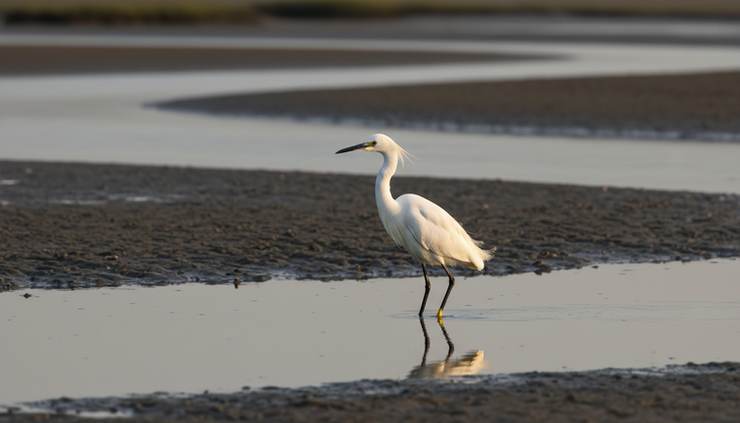
What the Little Egret looks like
The Little Egret, Egretta garzetta, is a small white heron. It is slimmer and more delicate than the Grey Heron, with a graceful neck, fine black bill, and long dark legs.
Its most famous feature is hidden until it moves: bright yellow feet. These can flash like little signals in the water as the bird hunts. During the breeding season, adults often grow fine head plumes and long, soft feathers on the back. These give the bird an even more elegant look.
The key field marks are:
White body and wings
Slim black bill
Black legs
Yellow feet
Long neck, often held in an S shape
Light, quick movements when feeding
At a distance, it can look like a bright white shape against dark mud or reeds. In flight, it tucks its neck in, like other herons, and trails its legs behind. That tucked neck helps separate it from white gulls or swans when seen from afar.
Where Little Egrets live
Little Egrets are wetland birds. They need water shallow enough to wade through, with enough fish, insects, prawns, worms, or other small creatures to catch.
They are most often found in places such as:
Estuaries
Saltmarshes
Mudflats
Lagoons
Rivers
Streams
Flooded fields
Marshes
Reedbeds
Lakes and reservoirs
Coastal pools
In Britain, they are especially common around the south and east coasts, but they are no longer only a southern bird. They now turn up on inland waters, canal edges, flooded meadows, and urban wetlands as well.
The perfect feeding place is usually shallow, open, and rich in small prey. Little Egrets do not need deep wilderness. They can use nature reserves, working farmland, river mouths near towns, and quiet corners of busy coastlines.
What matters most is safe feeding water and nearby trees or scrub for roosting and nesting. At night, they often gather with other herons and egrets in shared roosts. During the breeding season, they may nest in colonies, sometimes alongside Grey Herons, Cattle Egrets, or other waterbirds.
What Little Egrets eat
Little Egrets are carnivores. Their diet changes with place, season, tide, and weather, but they mostly eat small animals found in shallow water or damp ground.
Common food includes:
Small fish
Sticklebacks and minnows
Prawns and shrimps
Crabs and other small crustaceans
Aquatic insects and larvae
Frogs and tadpoles
Worms
Molluscs
Small reptiles in warmer regions
They are not fussy hunters. If prey is small enough to swallow and quick enough to be worth chasing, a Little Egret may try for it.
Food type | Where it is usually caught | How the egret catches it |
Small fish | Shallow pools, creeks, lagoons | Stalking, stabbing, quick lunges |
Prawns and shrimps | Tidal channels and estuaries | Foot stirring and sudden jabs |
Insect larvae | Marshes, reed edges, flooded fields | Slow searching and pecking |
Frogs and tadpoles | Ponds, ditches, wet meadows | Patient watching, then a snap |
Worms and small invertebrates | Mudflats and wet soil | Probing and rapid pecks |
A Little Egret’s hunting style is one of its great charms. Some herons wait like statues. The Little Egret can do that too, but it often hunts with more movement.
It may run through the water with wings half open, creating shade that makes prey easier to see. It may stir the mud with one foot, then strike at whatever breaks cover. Those yellow feet are not just decorative. They may help startle small fish and invertebrates into moving.

How Little Egrets behave
Little Egrets are active, alert birds. They spend much of the day feeding, resting, preening, and moving between feeding areas as tides and water levels change.
On the coast, the tide often sets the timetable. When mudflats are exposed, Little Egrets walk along channels and pools looking for food. When the tide rises, they may move to saltmarsh edges, freshwater pools, or roosting trees.
Inland birds follow a different rhythm. They may feed along river margins in the morning, rest during the middle of the day, and return to hunt in the evening. After rain, they may appear in temporary flooded fields, taking advantage of worms, insects, and small amphibians brought close to the surface.
Feeding habits
A Little Egret hunts in several ways. This flexibility helps it survive in many habitats.
It may:
Stand still and wait for prey to come near
Walk slowly through shallow water
Chase prey with quick steps
Stir the bottom with its feet
Shade the water with its wings
Follow livestock or larger birds to catch disturbed prey
This last behaviour is more typical of Cattle Egrets, but Little Egrets can also benefit when other animals disturb insects or small fish.
Social habits
Little Egrets can feed alone, especially where space or prey is limited. In rich feeding areas, several birds may gather together. They often tolerate one another, though they can be sharp-tempered if another bird comes too close.
At roosts and nesting sites, they become more social. Groups may settle into trees at dusk, their white bodies shining among dark branches. In mixed heronries, they may nest near Grey Herons and other egrets.
Their calls are not musical. Little Egrets are usually quiet when feeding, but at colonies or roosts they can make rough, croaking calls.
Breeding habits
Little Egrets usually nest in trees, bushes, or dense wetland vegetation. They build a platform of sticks, often in a colony. Both adults take part in nest care, and young birds remain dependent for a time after hatching.
In breeding plumage, the adults look especially fine. The long plumes on the head and back once made the species a target for the feather trade. In the past, egret plumes were used in fashion, and many egrets suffered because of it. Protection from hunting helped the birds recover in many parts of their range.
That history makes the sight of a Little Egret on a British marsh feel even more meaningful. It is not only a lovely bird, but also a reminder that protection can work.


Comments