
Vapourer Moths Where They Live and Why They Matter
A vapourer moth can pass through a garden almost unnoticed, yet its life story is anything but ordinary. The male is a small, rusty-brown moth that flies by day in a quick, wavering search for a mate. The female barely looks like a moth at all. She is wingless, pale, and stays close to the cocoon where she emerged.
That contrast makes the vapourer moth one of the more memorable moths found across Britain and much of Europe. It also makes it a useful species to understand. Its caterpillars feed on many common trees and shrubs, its adults support other wildlife, and its presence says something about the rough edges, hedges, and mixed planting that make places richer for nature.
What vapourer moths are
The vapourer moth, Orgyia antiqua, is also known in some places as the rusty tussock moth. It belongs to a group of moths often called tussock moths, named for the tufts of hair on many of their caterpillars.
The caterpillar is the stage most people notice first. It has a striking, almost toy-like appearance, with:
Four pale brush-like tufts along the back
Dark body colouring
Longer hair pencils near the head and tail
Small red or orange markings
A slightly spiky look
Those hairs are not there for decoration. They help protect the caterpillar from some predators. They can also irritate human skin, so it is best to admire the caterpillar without handling it.
Adult males look quite different. They are warm brown to orange-brown, with rounded wings and feathery antennae. Those antennae help them detect the scent, or pheromones, released by females.
The female is the surprising part. She has only tiny wing stubs and cannot fly. After emerging, she usually remains on or near her cocoon, releases pheromones, mates, and lays eggs close by. This means a vapourer moth population depends heavily on suitable habitat being nearby. Females cannot simply fly away to find a better hedge, park, or garden.
Where vapourer moths live
Vapourer moths live in many parts of the UK and are often found in ordinary places, not only nature reserves. They occur across much of Europe and have also been introduced to some other regions, including parts of North America. In Britain, they are widely distributed and can turn up anywhere that offers the right mix of food plants and shelter.
They are not tied to one rare plant or one specialised habitat. That flexibility helps explain why they can live around people.
Common vapourer moth habitats include:
Gardens with shrubs, hedges, and small trees
Parks and churchyards
Woodland edges and rides
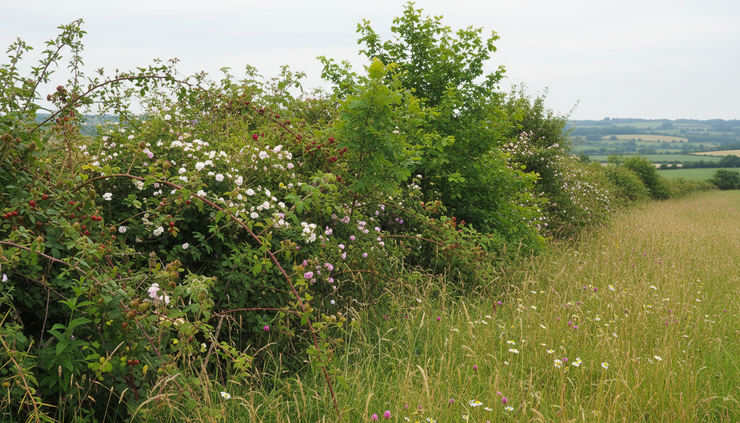
Hedgerows and field margins
Orchards and old fruit trees
Scrub, bramble patches, and rough grassland edges
Heathland and open woodland
Railway banks and other lightly managed strips of vegetation
The key is structure. Vapourer moths do well where plants grow in layers: low vegetation, shrubs, hedges, and trees. A short, closely mown lawn with a few isolated ornamental plants offers far less than a mixed hedge with hawthorn, bramble, rose, willow, or young oak.
Because female vapourers cannot fly, local continuity matters. If a hedge is removed, a shrub border is heavily sprayed, or every rough corner is tidied at once, the moths living there may not be able to recolonise quickly. The flying males may still appear, but without females and food plants close by, the population cannot persist.
What vapourer moth caterpillars eat
One reason vapourer moths are widespread is that the caterpillars feed on a broad range of woody plants. They are not usually fussy specialists. Their food plants can include native trees, shrubs, garden plants, and fruit trees.
Commonly used plants include:
Plant group | Examples |
Native trees | Oak, willow, birch, hawthorn, blackthorn |
Shrubs and climbers | Bramble, rose, dogwood, honeysuckle |
Fruit trees | Apple, pear, plum |
Garden shrubs | Various ornamental species |
This broad diet makes the vapourer moth a good example of how common wildlife often depends on ordinary plants. A single hawthorn hedge can feed caterpillars in spring and summer, offer nesting cover for birds, produce blossom for pollinating insects, and carry berries later in the year.
The caterpillars usually feed on leaves. In most natural or garden settings, their feeding is light and forms part of the normal give and take between plants and insects. They may nibble visible holes in leaves, but they are not usually a serious problem in healthy mixed planting.
On young or stressed plants, any caterpillar feeding can look more dramatic. Even then, reaching for pesticides is rarely the best answer. Sprays often kill many insects besides the target species, including predators and pollinators. In gardens, a better approach is to tolerate a small amount of leaf damage and let birds, beetles, spiders, and parasitoid wasps do much of the balancing work.
The unusual life cycle of a vapourer moth
The vapourer moth’s life cycle is closely linked to place. That is one of the reasons its habitat needs are so interesting.
Eggs are laid in a batch on or near the female’s old cocoon. They often overwinter there, waiting for warmer conditions and fresh leaves. When the caterpillars hatch, they begin feeding on nearby plants. Some may disperse by crawling, while very young caterpillars can sometimes be carried short distances by the wind on silk threads.
As they grow, the caterpillars moult several times. Their tufts become more obvious, and they gradually take on the bold look that makes them so recognisable.
When fully grown, the caterpillar spins a cocoon, often attached to a stem, fence, wall, tree trunk, or among leaves. Inside, it pupates. Later, the adult emerges.
Male and female adults then follow very different paths.
The male flies in daylight, often in a restless zigzag. He is searching for the scent trail of a female. The female waits. She releases pheromones from near her cocoon and relies on males finding her. After mating, she lays her eggs nearby, and the cycle begins again.
This life cycle explains why small patches of habitat count. A female vapourer moth cannot leave a bare patio, cross several roads, and settle in a distant wood. She needs suitable food plants, pupation sites, and shelter close to where she emerged.

Why vapourer moths matter
Vapourer moths are small, but they play several useful roles in the living systems around them. Their value is not based on rarity alone. Common species matter because they link many other species together.
They feed birds and other wildlife
Caterpillars are one of the most important foods for many birds, especially when birds are raising chicks. Soft-bodied larvae are rich in protein and easier for young birds to digest than many adult insects.
Vapourer moth caterpillars, despite their hairs, can still form part of the food web. Some predators avoid hairy caterpillars, but others learn how to handle them. Spiders, beetles, and predatory bugs may also take caterpillars or moths.
Adult moths feed other animals too. Day-flying males may be taken by birds, while moths that move in low light can be eaten by bats. Eggs and pupae can also be attacked by tiny parasitoid wasps and flies. To human eyes, that may sound grim, but it is one of the ways natural systems stay connected and balanced.
They turn leaves into life
A caterpillar is a converter. It takes plant material that many animals cannot digest and turns it into a body that other creatures can eat. That simple process moves energy from plants into the wider food web.
This is one reason leaf-eating insects are not just “pests”. In wild habitats, they are a bridge between plants and the birds, mammals, reptiles, amphibians, spiders, and other insects that feed on them.
A few chewed leaves can be a sign that a garden or hedge is working as habitat.
They support natural checks and balances
Vapourer moths also support parasitoids and predators. Parasitoid insects lay eggs in or on other insects, and their young develop by feeding on the host. This may sound harsh, but it is a normal and important part of insect life.
These relationships help prevent any one species from dominating for long. When gardens and countryside hold a wide range of insects, they also hold the natural enemies that keep populations in check.
Heavy pesticide use can break those links. It may remove caterpillars, but it also removes the predators and parasitoids that would have helped regulate them naturally.
They show the value of untidy edges
Vapourer moths are a reminder that wildlife often needs the parts of a place that look less polished. A hedge allowed to flower, a bramble patch at the back of a garden, a strip of unmown grass under shrubs, or a corner with fallen leaves can all provide shelter and food.
Neatness is not always bad. Paths, seating areas, and lawns all have their place. But if every part of a garden or park is clipped, sprayed, mown, and cleared, many insects lose the small spaces they need to complete their lives.
A good wildlife garden is not abandoned. It is varied.
How to recognise vapourer moths through the year
The easiest stage to recognise is the caterpillar. Look for it on shrubs and small trees from late spring through summer, though timing varies with weather and location. Its raised back tufts make it stand out from many other hairy caterpillars.
The male moth is more subtle but still distinctive once noticed. It flies by day, often in a low, searching pattern. Its warm brown colouring can look orange in sunlight.
The female is rarely seen unless someone finds a cocoon. She is small, wingless, and usually stays in one place. The eggs may be laid as a cluster on the cocoon surface. This habit can make old cocoons worth leaving in place when found in a safe spot.
If looking for vapourer moths, try places with mixed shrubs rather than open lawn. Hedges, bramble edges, young trees, and sheltered garden borders are all good places to watch.
Avoid handling the caterpillars. The hairs can cause irritation, and the caterpillar is better left to feed, pupate, or become food for something else.
How to make space for vapourer moths
Supporting vapourer moths does not require a specialist nature reserve. It mostly means offering the plants and structure they already use.
Good steps include:
Plant or keep native shrubs such as hawthorn, blackthorn, dog rose, and willow where space allows
Let part of a hedge grow a little thicker and flower before cutting
Keep some bramble if it can be managed safely
Avoid spraying caterpillars unless there is a serious, specific problem
Leave a few rough corners with leaves, stems, and mixed vegetation
Cut hedges outside the main bird nesting season and avoid cutting every hedge hard every year
Grow a mix of trees, shrubs, climbers, and herbaceous plants
In smaller gardens, even one mixed native hedge or shrub border can help. In larger spaces, variety is the main goal. Different heights, plant species, and cutting times create more opportunities for insects with different life cycles.
Vapourer moths also benefit when green spaces connect. A line of gardens with hedges, street trees, and shrub planting can work better than isolated pockets. Because females cannot fly, local habitat links are especially valuable.


Comments